Can Old Parquet Be Restored Without Losing Its Original Character?
Parquet flooring is one of the most beautiful and characterful timber floor styles you can have in a South West London property. Whether it is classic herringbone in a Victorian terrace, basket weave in a period flat, or a more formal geometric design in a townhouse, parquet brings detail, warmth and architectural interest that plain boards simply cannot match. The good news is that, yes, parquet flooring can usually be sanded without damaging the pattern — but only when the work is done with the right preparation, the right machinery, and the right sanding sequence.
At South West London Floor Sanding, we regularly restore timber floors that have lost their finish, suffered from scratches, or gone dull with age. If your parquet has worn patches, old varnish, staining, or uneven colour, professional floor sanding in South West London can often bring it back beautifully without sacrificing the design that makes it special. (South West London Floor Sanding)
The key point is this: parquet is not sanded in the same casual way as a standard strip floor. Because the grain direction changes block by block, the pattern can be affected by poor technique, over-sanding, aggressive edging, or a rushed finish. Bona’s sanding guidance makes clear that sanding protocols vary depending on the floor and the desired finish, while NWFA guidance emphasises that grit sequence and sanding procedures directly influence the final appearance and finish acceptance of a wood floor. (Bona)
The Short Answer: Yes, But Technique Matters
Parquet can absolutely be sanded and refinished successfully. In fact, many older parquet floors in South West London homes respond exceptionally well to restoration because the blocks are made from quality hardwood and were designed to last. However, whether the pattern stays crisp and attractive depends on several factors:
- the thickness of the parquet wear layer
- whether any blocks are loose, missing or uneven
- the condition of previous coatings
- the sanding sequence used
- the skill of the tradesman operating the machinery
- the choice of finish after sanding
Professional sanding is about removing old finish and surface wear evenly, not grinding away the decorative layout. Bona recommends matched sanding systems and appropriate grit progression, and Osmo’s flooring guidance also stresses careful sanding and suitable final grit before oiling. (Bona)
Why Parquet Needs More Care Than Standard Floorboards
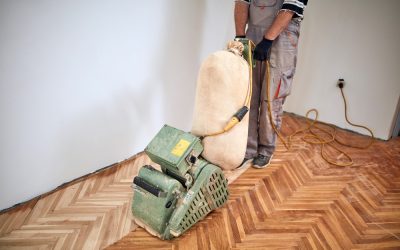
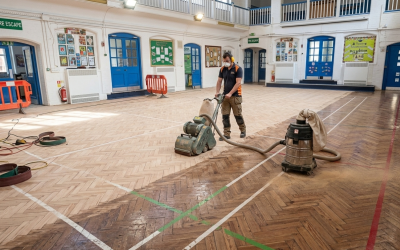
Traditional floorboards usually run in one direction, so sanding with the grain is more straightforward. Parquet is different because each block may sit at an angle to the next. In herringbone, for example, one set of blocks runs in one direction and the adjacent set crosses it. That means careless sanding can create visible scratch patterns, dish the edges, blur the visual sharpness of the design, or produce an inconsistent finish.
This is why parquet restoration starts with inspection, not machinery. A professional team will check for:
- loose or hollow-sounding blocks
- bitumen or adhesive failure
- previous over-sanding
- water damage or black staining
- gaps and edge movement
- repairs carried out in mismatched timber
If those issues are not dealt with first, sanding alone will not solve the problem. In many cases, parquet needs localised repairs before the main sanding begins. That is especially true in busy hallways, reception rooms and dining rooms where traffic has worn through the finish unevenly.
How Professionals Sand Parquet Without Damaging the Pattern
The process normally follows a controlled sequence rather than a single aggressive pass.
1. Assessment of the Floor’s Condition
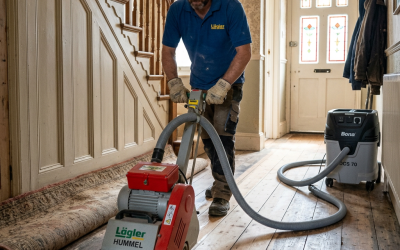
Before sanding starts, the floor must be inspected for structural soundness and remaining wear layer. If blocks are lifting or moving, they may need to be re-bonded or replaced first. This is a crucial stage because sanding unstable parquet can worsen gaps or chip edges.
2. Repairs Before Sanding
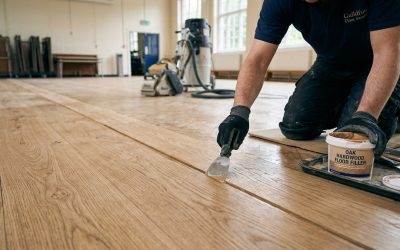
Loose parquet blocks are refixed, missing pieces are replaced with matching timber where possible, and any protruding elements are corrected. A proper repair before sanding protects the overall geometry of the pattern and helps the finished floor look intentional rather than patched.
3. Controlled Grit Progression
Bona’s published sanding sequences show that grit progression is planned carefully, not improvised. On wood floors, the sanding system is chosen according to finish type and required quality level, and the abrasive sequence is used to refine the surface rather than simply remove material as fast as possible. Bona also notes that exact protocols depend on the floor and the customer’s expectations. (Bona)
For parquet, the aim is usually to remove old coatings and flatten minor wear while avoiding deep scratches or excessive edge loss. Many professionals begin conservatively and refine gradually. Osmo’s flooring guidance likewise recommends careful sanding and identifies different suitable final grits depending on the intended look and product system. (Osmo)
4. Specialist Edge Work
One of the biggest risks to parquet is poor edge sanding. The centre of the room may look fine, while the perimeter gets over-cut, leaving a halo effect or visible mismatch. Bona’s sanding sheet separates edge sanding protocols for different finish standards, which underlines how important edge treatment is to the final result. (Bona)
5. Blending and Finishing Sand
NWFA guidance notes that final sanding blends scratch patterns from the big machine, edger, scrapers and hand-held sanders. That blending stage is especially important on parquet because the eye catches inconsistency very quickly across a geometric design. (Scribd)
6. Correct Sealing and Finishing
Once the surface is prepared, the finish needs to suit both the timber and the property. Some clients in South West London prefer a natural, low-sheen contemporary look; others want a richer, warmer tone in keeping with a period interior. Bona highlights different sanding protocols depending on gloss and finishing system, while Osmo’s flooring products are specifically intended for wooden floors and come with sanding guidance before application. (Bona)
What Actually Damages a Parquet Pattern?
Parquet rarely gets damaged by sanding itself. It gets damaged by bad sanding.
The main risks are:
Over-Sanding the Wear Layer
If the parquet has already been sanded too many times in the past, there may not be enough thickness left for another full restoration. This is why inspection matters.
Aggressive First Cuts
Trying to remove heavy finish too quickly can flatten edges, expose gaps, and leave the pattern looking tired rather than sharp.
Uneven Machinery Handling
Stopping and starting badly, lingering in one area, or using the wrong angle can produce dips and unevenness.
Poor Repairs
If loose blocks are not fixed first, the sanding machine can catch them or exaggerate height differences.
Wrong Final Grit for the Finish
The final sanding texture affects how stain, lacquer or oil is absorbed. That is one reason Bona and Osmo both give product-related sanding guidance. (Bona)
Is Old Parquet in South West London Worth Restoring?
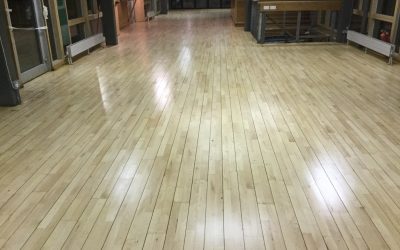
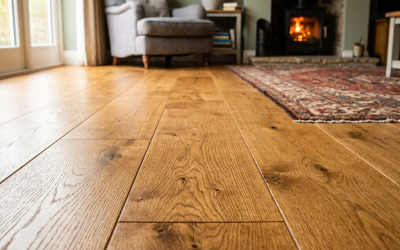
In many cases, yes. South West London properties often contain original or older parquet in reception rooms, hallways and dining spaces. These floors are part of the home’s character and, when restored properly, can significantly improve the overall feel of the property.
Restoring existing parquet is often preferable to replacing it because:
- the original layout suits the building
- mature timber frequently has better visual character
- restoration is less disruptive than full replacement
- repaired and refinished parquet can add value and visual appeal
- a well-finished parquet floor is easier to maintain than a heavily worn one
If your floor is only dull, scratched, or patchy, sanding and refinishing may be all that is needed. If there are loose blocks or prior repair issues, restoration may involve both repair and sanding together.
You can also direct readers to your wood floor sanding specialists in South West London early in the piece and again near the end for conversion-focused internal linking.
Signs Your Parquet Can Be Safely Sanded
Your parquet is often a good candidate for restoration if:
- the blocks are mostly secure
- the surface wear is in the finish rather than deep in the wood
- there is enough remaining wear layer
- the pattern is intact but hidden by old coatings or scratches
- the floor has local defects that can be repaired first
Bona notes that refinishing is often appropriate when the floor looks dull, has moderate to severe scratches, or the finish has worn away in places. That general advice applies especially well to parquet that still has sound structure beneath the damaged coating. (Bona)
Best Finishes for Sanded Parquet
The right finish depends on the look you want and how the room is used.
Lacquered Finish
A lacquered system is often chosen for busy family homes because it offers a durable sealed surface and a clean, consistent appearance.
Hardwax Oil Finish
Hardwax oil is popular where homeowners want a more natural, tactile timber look. Osmo’s flooring range is designed for wooden floors and includes options tailored to different use cases. (Osmo)
Matt or Ultra-Matt Look
Many South West London homeowners prefer a low-sheen finish that keeps the parquet looking elegant rather than overly glossy. Bona’s sanding protocol document distinguishes between finish expectations and gloss outcomes, showing how preparation and finishing choices work together. (Bona)
Parquet Sanding Mistakes to Avoid
If you are advising homeowners, these are the biggest warnings to include:
- do not assume every parquet floor has enough thickness left
- do not use a one-size-fits-all sanding sequence
- do not ignore loose blocks or adhesive failure
- do not choose finish colour before understanding the timber species
- do not let anyone rush edge sanding
- do not treat parquet like ordinary strip flooring
Parquet restoration is one of those jobs where experience shows in the final detail: clean lines, even tone, crisp borders and a finish that complements the pattern rather than masking it.
Conclusion
So, can parquet flooring be sanded without damaging the pattern? Yes — in the vast majority of cases, it can be restored beautifully, provided the floor is assessed properly, repaired where necessary, and sanded with a controlled professional process.
Parquet is valuable because of its pattern, not despite it. That means the goal is never just to strip the top layer off. The goal is to preserve the geometry, protect the edges, respect the timber, and apply a finish that lets the design stand out for the right reasons.
If your parquet floor in South West London is scratched, dull, patchy or simply looking tired, professional restoration is often the smartest way to protect its character and improve the whole room. For expert advice, pricing and a tailored assessment, visit South West London Floor Sanding or request a free quote.